The Zone of No Development
We are starting a series of four blogs exploring activities you can do with students to reflect on their use of AI. This first blog focuses on understanding how students use AI tools and the potential impact on genuine learning.
In today’s educational landscape, students are more connected than ever and able to reach information very quickly, yet many find themselves stuck, unable to reach deeper levels of understanding. The challenge is not access to information, but what happens when technology, particularly AI, becomes too helpful. Rather than rejecting AI, it is important to understand how constant assistance can reshape the way students learn.
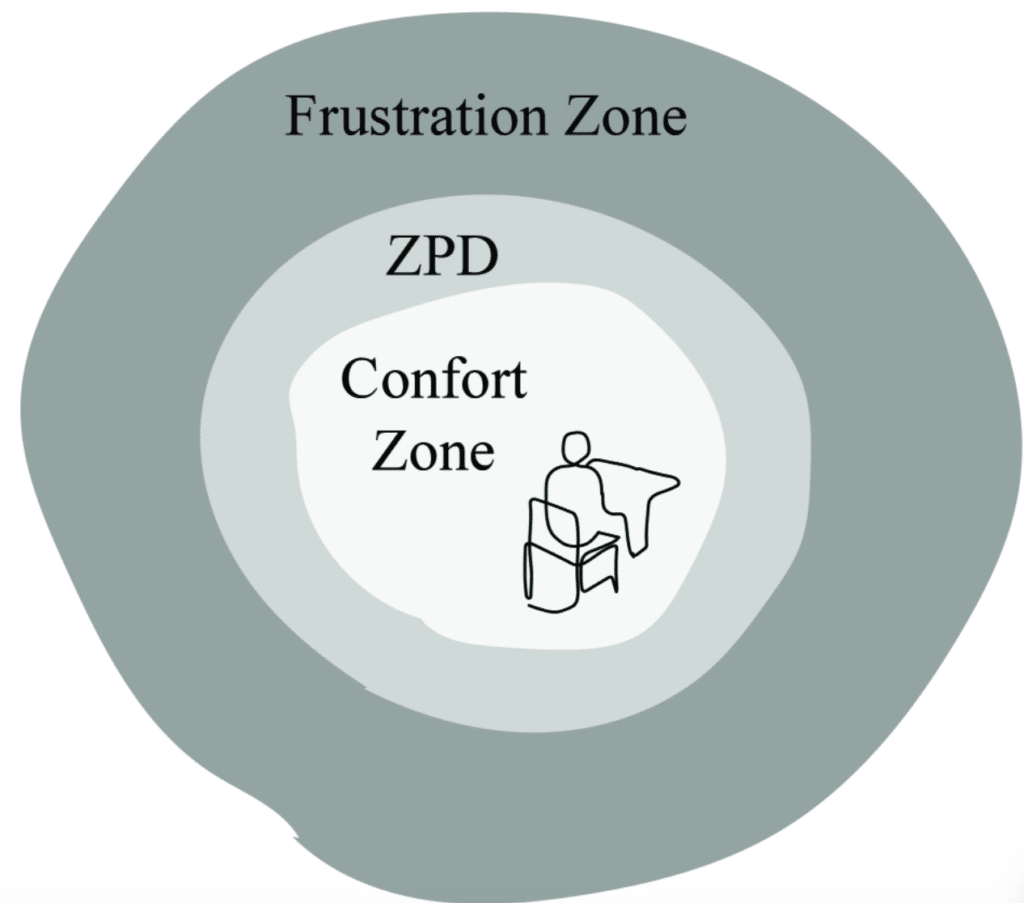
This discussion activity is based on the paper “The Unspoken Crisis of Learning: The Surging Zone of No Development” by Euzeli C. dos Santos Jr. and Tracey Birdwell. The paper revisits a classic idea from educational psychology: Vygotsky’s Zone of Proximal Development (ZPD). Traditionally, ZPD describes the space between what a learner can do independently and feels comfortable doing and what they can achieve with the just right support. That supportive zone is where meaningful learning happens, not in the comfort zone, and not where tasks are so hard that frustration takes over and students are likely to lose motivation.
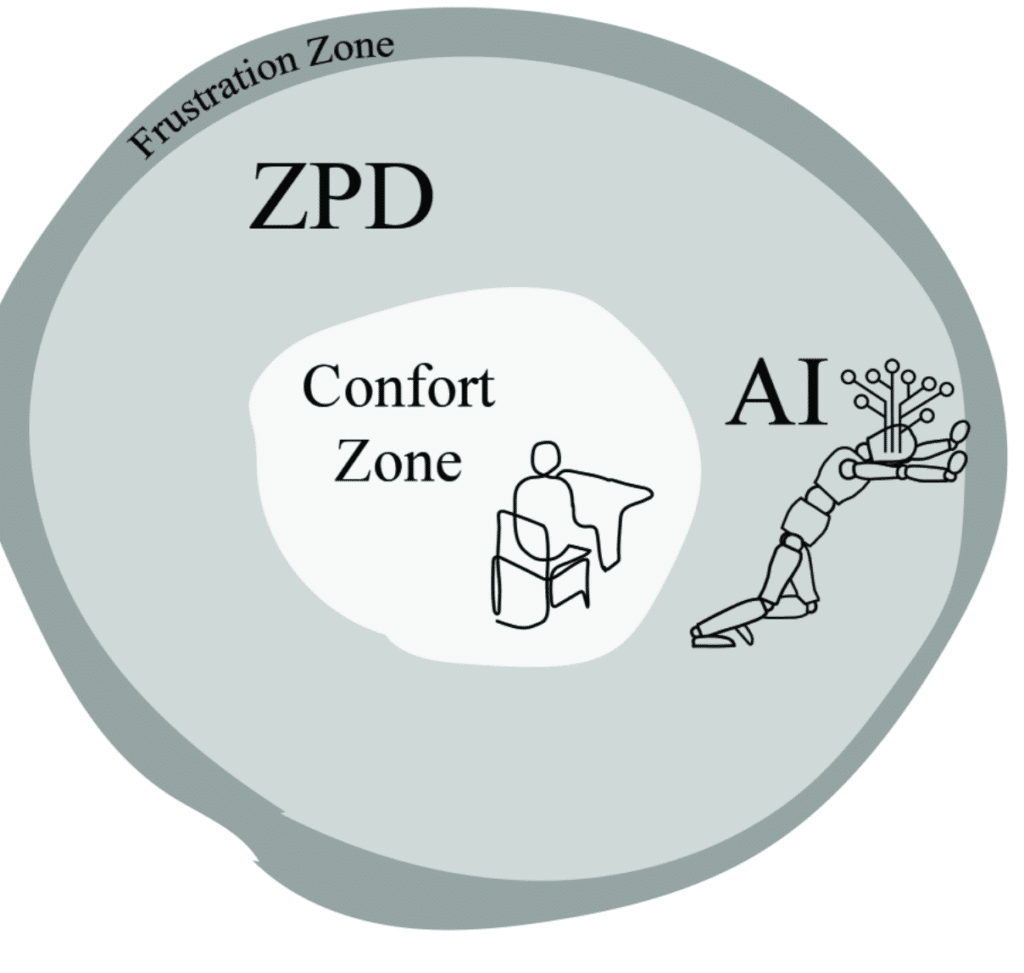
But the authors argue that the nature of support has changed. Tools like AI, which provide on-demand answers, are not temporary scaffolds that provide support for students to be able to move to the learning zone. That shifts the learning dynamic in ways students do not always fully acknowledge.
In classic classroom settings, scaffolding, or support from a teacher, mentor, or peer, is intentionally withdrawn as learners gain competence. That gradual fade-out forces learners to practise independently, solidifying knowledge and building confidence. However, when technology constantly provides solutions, explanations, and feedback, that fade-out rarely happens. Students can remain within a comfort bubble where performance looks high, but true understanding and autonomy stagnate.
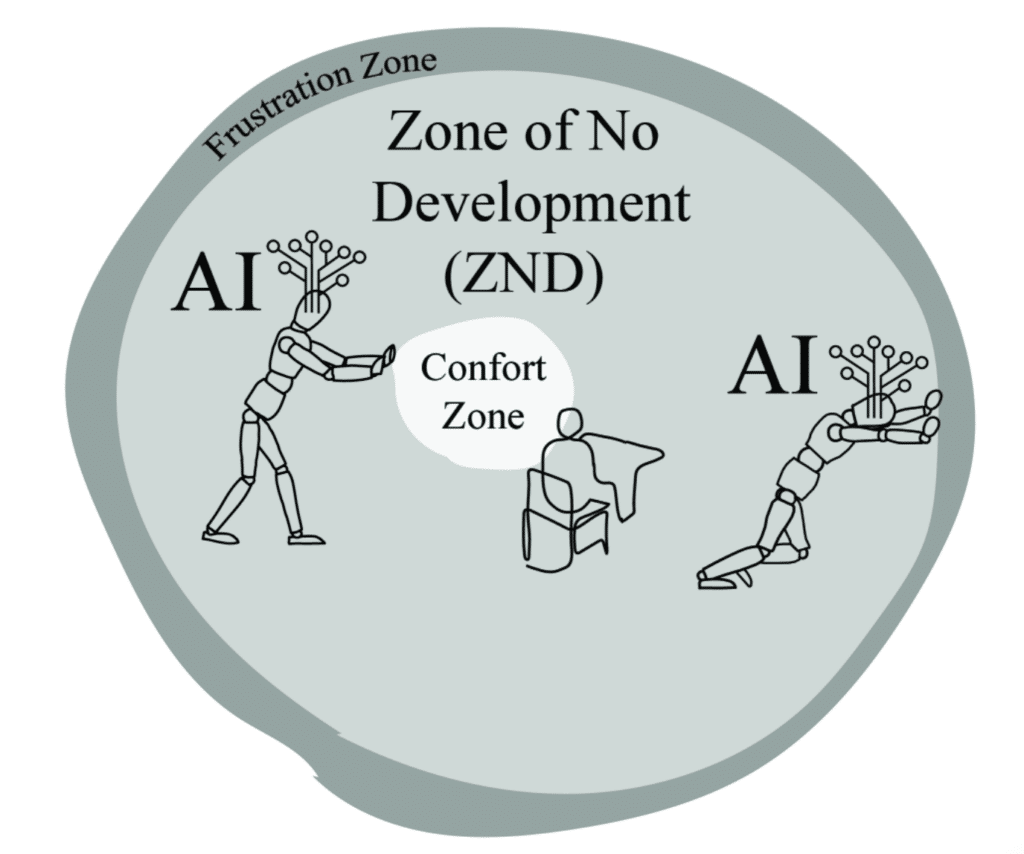
The authors describe this worrying state as the Zone of No Development (ZND), a space where assistance replaces challenge and cognitive growth stalls. Constant digital support can create an illusion of learning, with high performance in the moment but shallow retention and limited capacity for creative application later. The paper reminds us that struggle is not a sign of failure but a fundamental part of learning.
The lesson is clear: technology should amplify curiosity and capability, not replace the effort and reflection that drive genuine understanding. Students need moments to wrestle with challenges independently, to sit with confusion, and to question why an answer matters. That is where true growth and learning happens.
Reflection questions for classroom discussion
- Can you describe a time when AI helped you complete a task, but you did not fully understand it? What did that feel like?
- How do you decide when to rely on AI and when to try a problem on your own?
- What types of challenges help you learn the most, and how can you embrace them rather than avoid them?
- How might constant access to AI change the way you approach learning new concepts?
- What strategies could you use to ensure AI supports your thinking instead of doing the thinking for you?
- How could teachers design activities that encourage students to move out of the Zone of No Development?